Matcha Dasik with Almond Flour and Honey Recipe
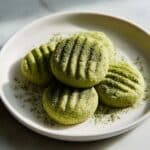
Matcha Dasik is a traditional Korean no-bake sweet made with almond flour, matcha powder, and honey, resulting in delicate, beautifully patterned green tea cookies that are naturally sweetened and perfect for teatime.
- Prep Time: 15 minutes
- Cook Time: 0 minutes
- Total Time: 25 minutes
- Yield: 24 servings 1x
- Category: Snack/Dessert
- Method: No-Cook
- Cuisine: Korean
- Diet: Gluten Free, Vegetarian
Ingredients
Scale
Dry Ingredients
- 1 ½ cup almond flour
- 1 ½ tablespoon matcha powder
- ⅛ teaspoon fine sea salt (balances the sweetness and brings out the matcha flavor – a tiny amount makes a real difference)
Dough Ingredients
- 3 tablespoon honey
- 1 teaspoon toasted sesame oil
For Dusting
- 1 teaspoon matcha powder (for dusting the molds to prevent sticking and add extra color)
- 1 teaspoon cornstarch (optional; mix with the dusting matcha if your dough is particularly sticky; rice flour also works)
Instructions
- Prepare the dry ingredients
Set a fine mesh sieve over your mixing bowl. Add the 1 1/2 cups of almond flour, 1 1/2 tablespoons of matcha powder, and the salt. Sift everything together, pressing any clumps through with the back of a spoon. Matcha is notorious for clumping, and almond flour can be uneven, so this step is what gives you that smooth, uniform green color throughout. If any large almond pieces won’t pass through the sieve, just discard them. - Mix dry ingredients
Give the sifted mixture a quick whisk with a fork to make sure the matcha is evenly distributed. You should see a consistent green color with no white streaks or dark green pockets. - Make the dough
If your honey is thick or crystallized, warm it gently in a small saucepan over low heat for about 1 minute, or microwave it for 15 seconds. You want it fluid enough to mix easily – not hot, just pourable. - Combine ingredients
Drizzle the honey and sesame oil into the almond flour mixture. Use a fork to stir everything together initially, then switch to your hands. Knead the mixture right in the bowl for about 2 minutes. At first it will seem crumbly and dry – this is normal. Keep pressing and squeezing. The oils from the almond flour will release as you work it, and the honey will distribute. You’re done when the dough holds together when you squeeze a small amount in your fist without crumbling apart. - Test the dough
Pinch off a small piece and press it firmly between your fingers. It should hold its shape cleanly without cracking at the edges. If it’s too dry and crumbly, add honey half a teaspoon at a time. If it feels wet or oily, add a teaspoon of almond flour. The consistency you’re after is like slightly damp sand that compacts perfectly – think kinetic sand. - Shape the dasik
Mix your dusting matcha with the cornstarch (if using) in a small dish. Use a clean, dry pastry brush or your fingertip to lightly dust the inside of each mold cavity. This prevents sticking and gives the surface of each dasik a beautiful matte finish. Don’t overdo it – a whisper-thin coating is all you need. - Form dasik pieces
Pinch off about 1 teaspoon of dough and roll it into a smooth ball between your palms. Press it firmly into the mold cavity, making sure to push the dough into all the carved details. Really press hard here – the firmer you pack it, the better the pattern will come out and the less likely the dasik is to crumble. The dough should be flush with the top of the mold. - Unmold dasik
To unmold, flip the mold over onto your parchment-lined surface and give it a firm tap on the back. The dasik should pop right out. If it sticks, you may need a touch more dusting powder, or the dough might be slightly too wet. If the pattern isn’t crisp, press harder next time. The first one or two are always a learning curve – don’t worry about it. - Repeat forming
Repeat with the remaining dough. You should get about 24 pieces depending on the size of your mold. Arrange them on parchment paper in a single layer as you go. If you’re using a mooncake press instead of a traditional dasik mold, roll the dough into balls that fit snugly into the press barrel, then push down firmly and eject onto the parchment. - Set and store
Let the finished dasik sit at room temperature for about 10 minutes. This brief rest allows them to firm up slightly and helps the surface dry just enough to handle without smudging the pattern. They won’t change dramatically – they’re no-bake – but this rest makes them sturdier. - Storage
Once set, transfer them to an airtight container with parchment paper between layers. They’re ready to eat immediately, but they actually taste even better after resting for a few hours – the matcha flavor mellows and the honey seems to deepen. Store at room temperature for up to 5 days, or refrigerate for up to 2 weeks.
Notes
- A tiny amount of fine sea salt balances the sweetness and enhances the matcha flavor significantly.
- If your dough is particularly sticky, mix cornstarch (or rice flour) with the dusting matcha powder to prevent sticking.
- The first one or two dasik may be tricky to unmold – this is normal and improves with practice.
- Warming honey gently makes it easier to mix but avoid heating it too much.
- Resting the finished dasik at room temperature for 10 minutes firms them up and helps the surface dry for handling without smudging.
- Matcha flavor mellows and honey flavor deepens if dasik are rested for a few hours before eating.
- Store at room temperature up to 5 days or refrigerate up to 2 weeks in airtight container.
Keywords: Matcha Dasik, Korean tea cookies, almond flour sweets, no-bake matcha dessert, traditional Korean snack